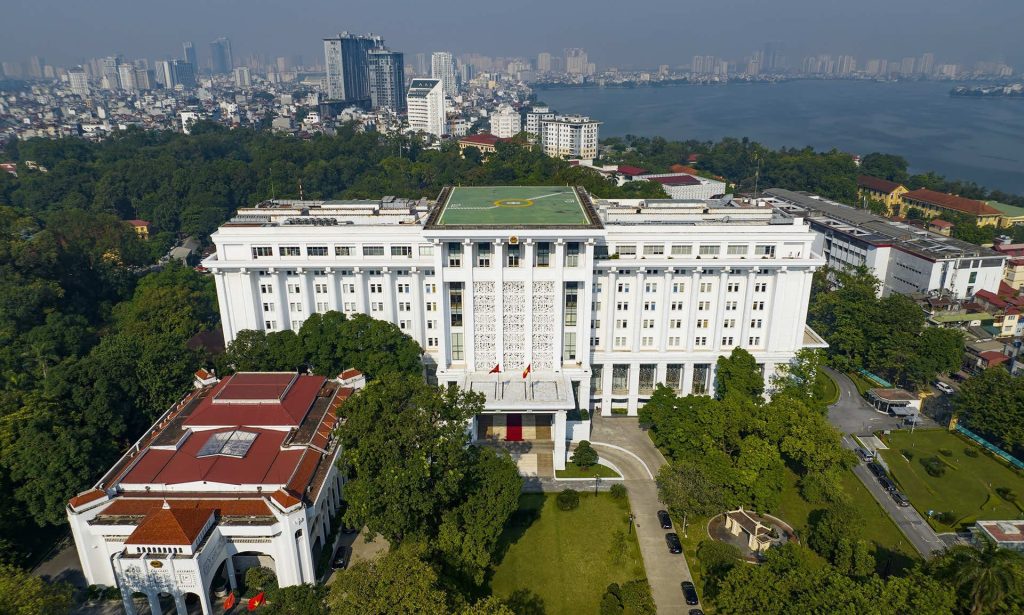

Vietnam’s Government is undergoing a major restructuring that many are calling “Doi Moi 2.0,” a reference to the 1986 Doi Moi reforms that ushered in an era of extraordinary economic growth for the country. This restructuring has already reduced the number of departments at the central Government level from 22 to 17 (including the consolidation of the Ministry of Finance and the Ministry of Planning and Investment into one department) and it aims to reduce the number of provinces from 63 to 34 and streamline Vietnam’s current three-tier administrative structure (Province – District – Commune) to a two-tier system (Province – Commune)¹.
The goal of these and the other measures discussed below is to empower a reduced number of local leaders by granting them more autonomy and decreasing the number of layers required to approve new public spending and real estate projects, among others. As such, the initial beneficiaries of these reforms are likely to be companies involved in real estate and infrastructure development. Finally, we note that this approach mirrors China’s “One City One Policy,” whereby local leaders can better tailor local policies to the goals of their regions.
The Government’s Plan and Why Now
Plans to streamline Vietnam’s Government date back to 2016. They are now progressing for a variety of reasons, including the current Government’s strong commitment to pro-growth reforms as well as the growing belief among Vietnamese policy makers that the next decade presents a golden opportunity for Vietnam to achieve accelerated levels of GDP growth, after which demographic² and other headwinds will make it harder to maintain very high growth rates. These consolidation efforts (see table below), coupled with the Government’s intensified focus on technology-driven growth (e.g., AI and semiconductors) should be viewed as part of efforts to ensure that Vietnam does not fall into the “middle income trap.”

That last point (and other dynamics discussed below) has engendered a sense of urgency among both policy makers and business leaders. The merger of central Government ministries commenced in March, while the two-tier local Government system will be effective from July 1st and the deadline for merging provinces is set for September 15th, 2025. A key enabler of these aggressive plans is a prior initiative to digitize and centralize data from thousands of public sector units into a single National Data Center,³ which facilitates mergers of those entities without public service disruptions like those that Greece experienced in its 2010⁴ analogous but failed administrative consolidation.
Benefits of a More Efficient Government
The reforms outlined in this report should result in expedited approvals of both infrastructure and real estate development projects. Concentrating more authority into fewer decision makers should lead to quicker outcomes, and the dramatic restructuring of local Governments should increase public servants’ sense of urgency. In addition, there is considerable confidence that accelerated infrastructure development will drive “Transportation Oriented Development (TOD)” in Vietnam, as it did in Japan’s suburbs in the 1960s and 1970s.
Further to that last point, HCMC is slated to absorb substantial territory of its surrounding suburbs and satellite cities including Binh Duong and Vung Tau⁵. This consolidation should lead to much better coordination of infrastructure development, especially between geographies that are currently governed by different local Government entities. In short, plans to increase the size of HCMC from its current population of 9m and geographic area of 2,300 sq km to a city of 13m people in a land area of 6,800 sq km should foster Transportation Oriented Development in areas that were previously suburbs of HCMC, which in turn should drive land prices in those areas higher.
Towards a Leaner, More Efficient Civil Service
Public salaries and administrative expenses account for a combined ~60% of the state’s total budget according to various sources⁶ and the Government is targeting a 30% reduction of its administrative overhead by eliminating costs associated with unnecessary bureaucracy. Those savings are expected to be funneled into infrastructure development, scientific research and STEM programs and other prioritized projects, although the Government has ensured (via Decree 67/2025) that there is sufficient funding for early-retirement payments of an initial circa 100,000 public employees, with current estimates suggesting VND 170 trillion (USD 6.5 billion) will be allocated for this purpose. All of that said: 1) these Government layoffs will not affect teachers and medical staff, and 2) Vietnam is intensifying its effort to attract new, high-performance employees into Government by restructuring public salaries to better reward performance rather than seniority.
Furthermore, there are also plans to consolidate the composition of the Government’s middle-layers, following the consolidation in recent months of the Government’s top leadership roles. These measures mark a shift towards a more merit-based public sector — an approach reminiscent of the reforms introduced in Singapore during the 1980s and 1990s⁷, where aligning civil servant salaries with private sector standards helped foster a highly capable and trusted government.
Merger Timeline
We expect the full consolidation of Vietnam’s Government to take 2-3 years (see below a schedule of milestones), given the need to harmonize many legal, regulatory, and operational changes across the newly formed provinces and bearing in mind the experience of Denmark’s 2007-2009 “Strukturreformen”⁸ reforms that reduced country’s municipalities from 271 to 98. That said, the merger of Vietnam’s provinces is set to be consummated before the 14th National Party Congress in January 2026 — the country’s most significant political gathering is held once every five years.

Investment Implications
The ongoing Government restructuring and the shift towards a more streamlined administrative system are expected to have significant implications for the Vietnamese economy, and consequently, for VinaCapital’s investment strategy. As Vietnam increases its focus on domestic growth levers, VinaCapital is selectively enhancing its investments in sectors expected to be the primary beneficiaries, such as infrastructure, real estate, materials, logistics, energy, and banking (the latter of which touches nearly every aspect of the domestic economy, and which is expected to benefit most for reasons discussed in this report).
Furthermore, hopes are high that increased infrastructure spending would also help make consumers more confident to increase their spending, which in turn may benefit other sectors such as consumer goods and further cushion the negative impact to GDP growth of the slower export growth to the US that we expect for this year. VinaCapital is also involved in projects that support the development of artificial intelligence in Vietnam, such as collaborating with strategic partners to build data centers; Vietnam is an emerging player in the global AI landscape⁹, thanks to its outstanding talent pool, which will be the topic of our next “Economist’s Note” report.
Summary
Vietnam’s ongoing Government restructuring is part of a series of bold moves aimed at avoiding the “middle-income trap.” These rapid restructuring efforts focus on enhancing the value of urban centers, improving zoning, streamlining infrastructure development, and reducing bureaucracy. The integration of digital transformation in public services and the push for uniform execution to minimize delays will be crucial for the success of these efforts.