
Vietnam’s Government increased its 2025 infrastructure spending target from 6% of GDP to 7%/GDP last week and simultaneously lifted its GDP growth target for 2025 from 7% to 8%. The increased 1%/GDP of planned spending on infrastructure projects should help the country achieve the Government’s new, 1% higher 2025 GDP growth target and will also support the country’s long-term growth prospects and appeal to FDI investors.
The Government’s newly approved plan to increase infrastructure investment in Vietnam by nearly 40% this year, to USD 36bn (up from the USD 31bn originally approved late last year), should help offset the hit to the country’s GDP growth we expect from slower export growth to the US, following a 23% surge in Vietnam’s exports to the US last year. Other recent, infrastructure-related updates include:
- Several large projects were initiated/approved over the last two months, including a USD 67 billion high-speed rail line that would span the length of the country and the USD 8 billion Lao Cai–Hanoi–Hai Phong railway.
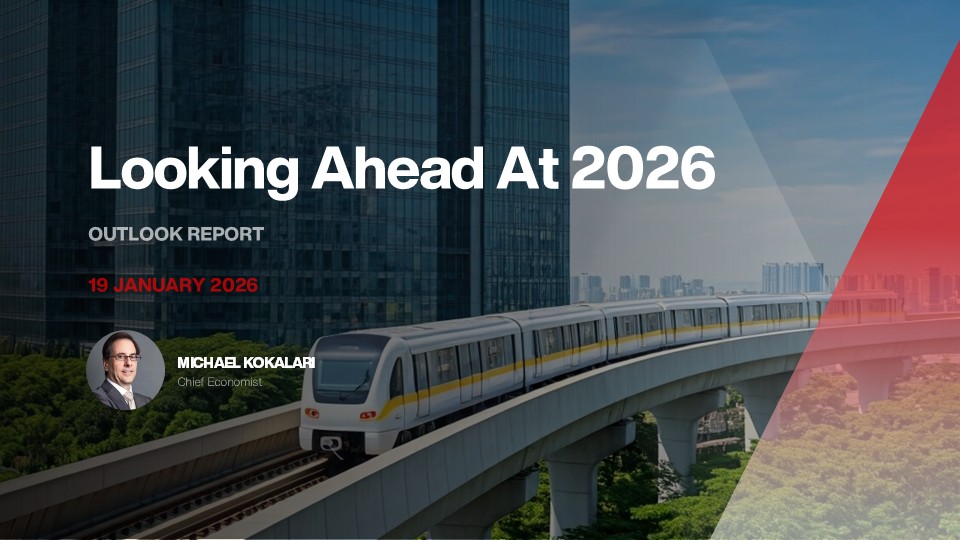
- The first section of Ho Chi Minh City’s long awaited metro line opened in December 2024, which we believe is helping to support enthusiasm/momentum for accelerated infrastructure development going forward.
- Three major laws came into effect last month that are directly aimed at accelerating project approvals, streamlining investment disbursements, and driving greater private sector participation in infrastructure projects¹ (other new laws should also help support energy and transportation infrastructure development).
Further to that last point, Vietnam’s Government has ample fiscal resources to ramp up spending. Government debt is well below 40%/GDP and we estimate that the Government has over USD 40bn of undisbursed funds previously earmarked for infrastructure spending. The primary bottleneck to increasing infrastructure spending (or to achieving annual spending targets) has been bureaucratic issues impeding the project approvals and other processes entailed in large-scale project development.
The new laws mentioned above should help expedite progress and insure that spending targets are achieved (infrastructure spending often undershoots the Government’s annual spending targets). Finally, those new infrastructure-related laws should also be viewed in the context of another plan that the National Assembly also passed last week to shrink the size of the country’s Government² by roughly one-fifth – which will have wide-ranging, positive impacts on Vietnam’s economy going forward, including easing the bureaucratic obstacles that impeded infrastructure development in recent years.
Top Priorities: Transportation & Electricity
More than 80% of planned infrastructure spending this year is earmarked for boosting Vietnam’s electricity generation and distribution capacity, and for improving Vietnam’s transportation network. By 2030, Vietnam aims to double the total length of its highway network, to double airport passenger capacity and to increase the country’s seaport capacity by 50%. The Government aims to double Vietnam’s electricity generation and transmission capacity over 2021-2030. The largest on-going projects are listed below, although many smaller-scale projects are also underway.
Major Infrastructure Projects (USD billion)

In early 2025, the Government announced additional public investments into large infrastructure projects related to railways and ports (and earlier construction timelines for certain projects, as noted previously). Investments into railways and ports aim to further streamline freight movement, improve workforce mobility, and facilitate more FDI inflows into Vietnam.
For example, expanding Vietnam’s highway/railway network would enable FDI companies to locate their factories in a wider range of areas to access a deeper labour pool (note that 80% of freight volume in Vietnam is transported by road). The Lao Cai-Hanoi-Hai Phong railway (and other 2 lines of Lang Son – Hanoi and Mong Cai – Ha Long – Hai Phong) would link nine provinces in Vietnam to China’s Yunnan province, enabling a more efficient flow of goods across the two countries (~40% of Vietnam’s imports come from China). This railway may also facilitate transit of Vietnamese goods to Europe through China.
Furthermore, the launch of new metro lines in Hanoi and HCMC would improve workforce mobility by connecting cities and its outskirts with key industrial hubs. For that reason, Metro expansion in Hanoi and HCMC is set to accelerate under a fast-track mechanism, with a resolution approved at the extraordinary National Assembly meeting last week granting city officials the authority to streamline the approval of new projects. As a result, construction of Hanoi’s Metro Line 2, linking Noi Bai Airport, and a new metro line to Can Gio in HCMC are expected to begin this year.

Regarding Vietnam’s ports, the Government’s recent revision of its seaport development plan added the Can Gio port project, which would accommodate larger vessels, supporting Vietnam’s goal of increasing its seaport capacity by 50% by 2030. We believe that the Government could further increase cargo handling efficiency by encouraging investments into digitalization and automation at Vietnam’s ports to reduce turnaround times and to increase the logistics sector’s productivity.
Electricity Generation
Vietnam’s Power Development Plan VIII (PDP8), approved in May 2023, anticipates 9% annual electricity consumption growth for the foreseeable future (which is comparable to recent, growth rates). The plan anticipates USD 135 billion of expenditures to double Vietnam’s electricity generation capacity over 2021-2030 with most of that growth expected to come from gas & LNG³ (37% of the total planned capacity growth), renewables (27% of the growth), and coal (19%/growth).
Note that hydropower generation capacity has been nearly maxed out for years, and that a revision to PDP8 expected by March 2025 is likely to include the revival of two proposed nuclear power plant projects. Finally, we are aware of four large LNG projects that are expected within the next five years, including a USD 3.0 billion project that VinaCapital is actively involved in Long An. We are also aware of six large renewable energy projects, including the Ba Ria Vung-Tau Offshore Wind Farm, a 1.6 GW project that is expected to be operational by 2028.
Summary
Vietnam’s Government aims to accelerate the country’s GDP growth from 7.1% in 2024 to 8% in 2025 despite the fact that export growth to the US is almost certain to slow from last year’s heady 23% surge. Extraordinary measures will be needed to achieve that goal, but the near 40% surge in infrastructure investment that the Government is now planning would add ~2%pts to Vietnam’s 2025 GDP growth – if the Government manages to hit its disbursement targets this year.