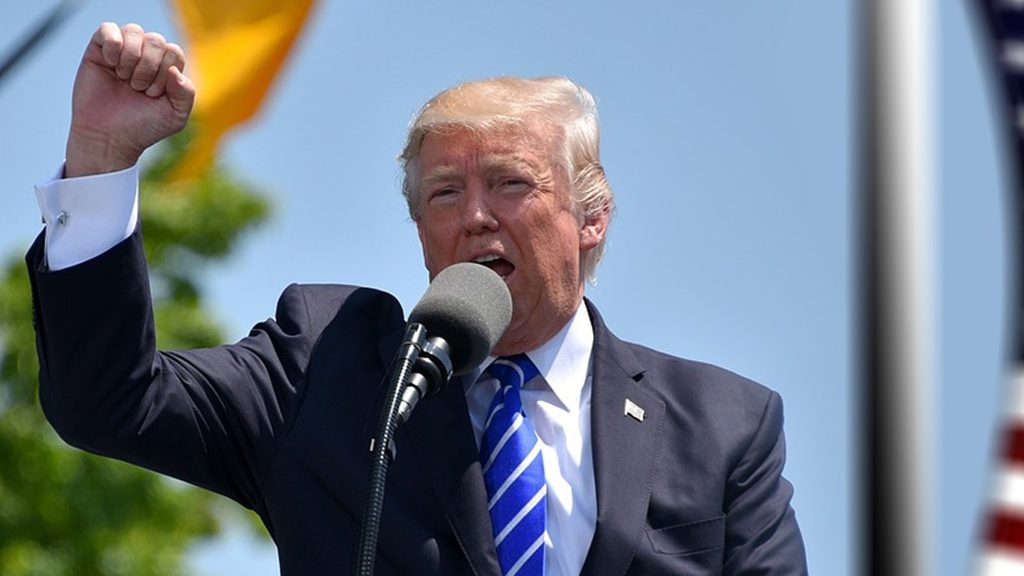

With the U.S. presidential election now complete, all eyes have turned to what the new Trump administration will actually do once it takes office in January 2025. In many countries around the world, concerns are being raised about the impact of Trump’s election on their economies. However, we believe those risks are overestimated and we see no risk that Trump’s election will derail Vietnam’s healthy economic trajectory for a variety of reasons.
First and foremost, the U.S. campaign was rife with outlandish statements and hyperbolic media reporting, leading to overly pessimistic perceptions of a second Trump administration, particularly the economic consequences. We believe the reality of what’s to come is likely to be more conventional and we’ve outlined some quick takeaways on our views of Vietnam’s economic and trade relationship with the U.S. in light of Trump’s election.
The Tariff Threat is Mostly Overblown
Both presidential candidates vowed to “re-shore” manufacturing jobs back to the U.S. if elected. Trump said he would impose 60% tariffs on imports from China and impose 20-30% tariffs on other countries to achieve that objective; in our understanding, Trump wants Chinese manufacturers to build factories in the U.S. and hire American workers similar to what the Japanese did in the 1980s and 1990s.
We believe that Trump promised high tariffs on the campaign trail because: 1) the threat of imposing tariffs (especially on China and Mexico) is powerful campaign rhetoric that appeals to one of Trump’s key constituencies, disaffected blue collar workers, and 2) the 60% figure is probably a bargaining chip for future negotiations with China (bearing in mind Trump’s background as a real estate developer, a business that often entails extreme “opening gambit” negotiating positions).
In reality, Trump has a number of accomplished individuals who are advising him on economic issues and are likely to have more influence over him than those he had during his first administration and who fully understand the negative consequences of imposing overly draconian tariffs on imports to the U.S. Those negative consequences include preventing re-shoring manufacturing jobs to the U.S. because draconian tariffs would push up the value of the U.S. Dollar.
Further to that last point, Vice President-elect JD Vance often pointed out in the past that the role of the U.S. Dollar as the world’s reserve currency has resulted in a significant overvaluation of the Dollar – which in-turn makes it uneconomic to bring back manufacturing jobs to the U.S. Imposing draconian tariffs would exacerbate this problem.
A more immediate concern is the fact that the U.S. economy is clearly headed for the worse “Stagflationary” economic conditions since the 1970s for a variety of reasons, including soaring U.S. government debt (recall that Stagflation means higher inflation and lower economic growth). Inflation was low when Trump imposed tariffs on China, but this time draconian tariffs would exacerbate the major rebound in inflation that the US economy was always likely to encounter next year (irrespective of which presidential candidate won the election). Trump has demonstrated that he will not put ideology ahead of economics, making it unlikely that he would actually take actions that would exacerbate inflation, especially given that the main reason he won re-election was voter dissatisfaction with the economy.
Other Observations about Vietnam-US Trade Relations Under Trump
- China is the focus, not Vietnam: Trump initiated the US-China trade war and Biden essentially continued it, making it clear that both U.S. political parties view China as a strategic competitor to the U.S. In contrast, we have cited voluminous evidence in our various reports and webinars of an enthusiastic economic embrace of Vietnam at the highest levels of the U.S. Government. Furthermore, Trump is a populist, and we are not aware of any significant reservations from American consumers to purchase “made in Vietnam” products.
Consequently, there’s no reason for Trump to target Vietnam from a populist standpoint. In fact, Vietnam may be viewed as helpful in weening the U.S. off of low-end China-made goods because high wages and low availability of qualified factory workers will likely limit U.S. efforts to re-shore manufacturing jobs to only high value-added products, which we discussed in previous reports. In short, Vietnam can make things that U.S. consumers want to buy but are too expensive to be made in the U.S. and which Trump would prefer they don’t buy from China. - Expect less chaos than last time: Trump did not actually believe he would win the 2016 presidential election, and as a result, entered office unprepared for the challenges laid before him (according to his own recollections and interviews). This time, Trump has a better understanding of how things work as well as some notable business leaders advising him, making it more likely that he will have a more focused approach to trade-related issues.
- Vietnam’s massive trade surplus with the U.S. could become an issue: Vietnam had a massive, circa USD 100b trade surplus with the US last year, making it the country with the third-largest trade imbalance with the U.S. after China and Mexico. At some point, this numerical imbalance will become an issue for the Trump administration. Fortunately, that can be readily addressed by purchasing large-ticket products such as LNG and aircraft engines from the U.S.
In conclusion, we believe Vietnam should fare reasonably well under the next Trump administration. Its adept “Bamboo Diplomacy” of maintaining friendly relations with all of the world’s major powers has served it well, and there is no reason to believe that will change. While some new U.S. tariffs on imports are possible, we believe it’s very unlikely that the U.S. will impose draconian tariffs (20-30%) on imports from Vietnam.
Furthermore, if the U.S. were to impose blanket tariffs of, for example, 5-10% on imports from all countries besides China, Vietnam would retain its comparative advantages against other potential competitors for FDI inflows. Consequently, the qualities that make Vietnam appealing for manufacturers now and that resulted in billions of dollars of FDI flowing into the country should continue. That said, Vietnam would be well-served to start looking at how it can reduce its trade surplus with the U.S. before it becomes an issue with the new administration./.