
High-Tech Momentum Accelerates. Leading Indicators Point to Sustained Growth
Booming High-Tech Exports Poised to Continue in the Months Ahead
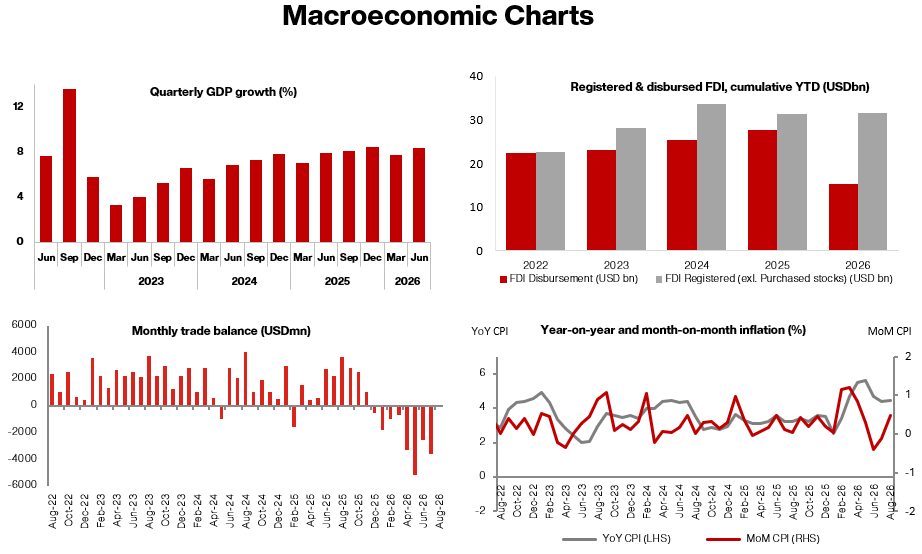
Vietnam’s exports of high-tech products accelerated from 26% YoY growth in 8M25 to 40% in 8M26, with clear leading indicators of continued strength in the months ahead. These include the New Orders PMI sub-index rising from 53.9 in July to 55.3 in August (the headline PMI ticked up from 52.9 to 53.3); newly planned FDI projects up nearly 60% YoY this year, reaching a stunning 10%/GDP in 8M26, and; imports of the electronics components needed to produce high-tech exports surging nearly 70% YoY in 8M26.
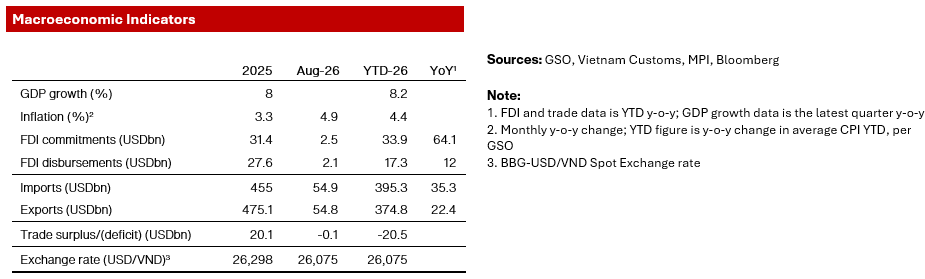
Vietnam’s total imports grew 35% in 8M26, vastly outpacing 22% export growth, and generating a record-high USD20.5b trade deficit thus far this year, equivalent to 6%/GDP. Despite the record-high trade deficit, the USD-VND exchange rate has actually appreciated by nearly 1% YTD, supported in part by 8-9% bank deposit rates for 12-month deposits at reputable banks, and because of the recent, strict measures the Government has taken to stem “Errors & Omissions” leakage in Vietnam’s Balance of Payments account.
Vietnam’s Trade Surplus with the US Surged, but Tariff Risk Stay Limited
Vietnam’s trade surplus with the US surged nearly 23% to USD106.6b in 8M26, making Vietnam the country with the largest surplus with the US this year, according to Bloomberg. Vietnam’s USD107.7b trade deficit with China, plus the Trump administration’s publication of a report titled “The Great Transshipment Scam” in August has prompted concerns that the US will target Vietnam with 40% transshipment tariffs, but that report actually reassured us that the US is not likely to impose onerous tariffs on Vietnam’s exports, which we discussed here.
Finally, Vietnam’s high-tech export surge lifted manufacturing output growth from 10.5% YoY in 8M25 to 12.5% growth in 8M26, making manufacturing – which accounts for a quarter of Vietnam’s GDP growth – the second-most important economic growth driver this year. Consumption, which accounts for over 60% of GDP, remains Vietnam’s most important growth driver, but real retail sales grew 7.6% YoY in 8M26, nearly unchanged from 8M25 and below the 8-9% typical pre-COVID growth rates (manufacturing grew at around 12% on average, pre-COVID).
Vietnam’s Economic Outlook Remains Bright, Despite Higher Inflation
The one caveat to this otherwise bright economic picture is that CPI inflation in Vietnam ticked up from 4.5% YoY in July to 4.9% driven by a rebound in global oil prices. The State Bank of Vietnam (SBV) aims to limit average inflation to 4.5% this year – a level which has essentially been reached – making it difficult for the SBV to respond decisively to the high interest rates mentioned above. To be clear, the surge in deposit rates this year is being driven by demand for capital rather than by inflation, which we discussed in our July economic commentary and which was also discussed in this recent Bloomberg article.